Niacinamide Serums Compared: Finding Your Percentage Sweet Spot
Is 10% niacinamide actually better than 5%? The published research says the sweet spot is lower than the marketing suggests. A percentage-by-percentage guide matched to your skin type.
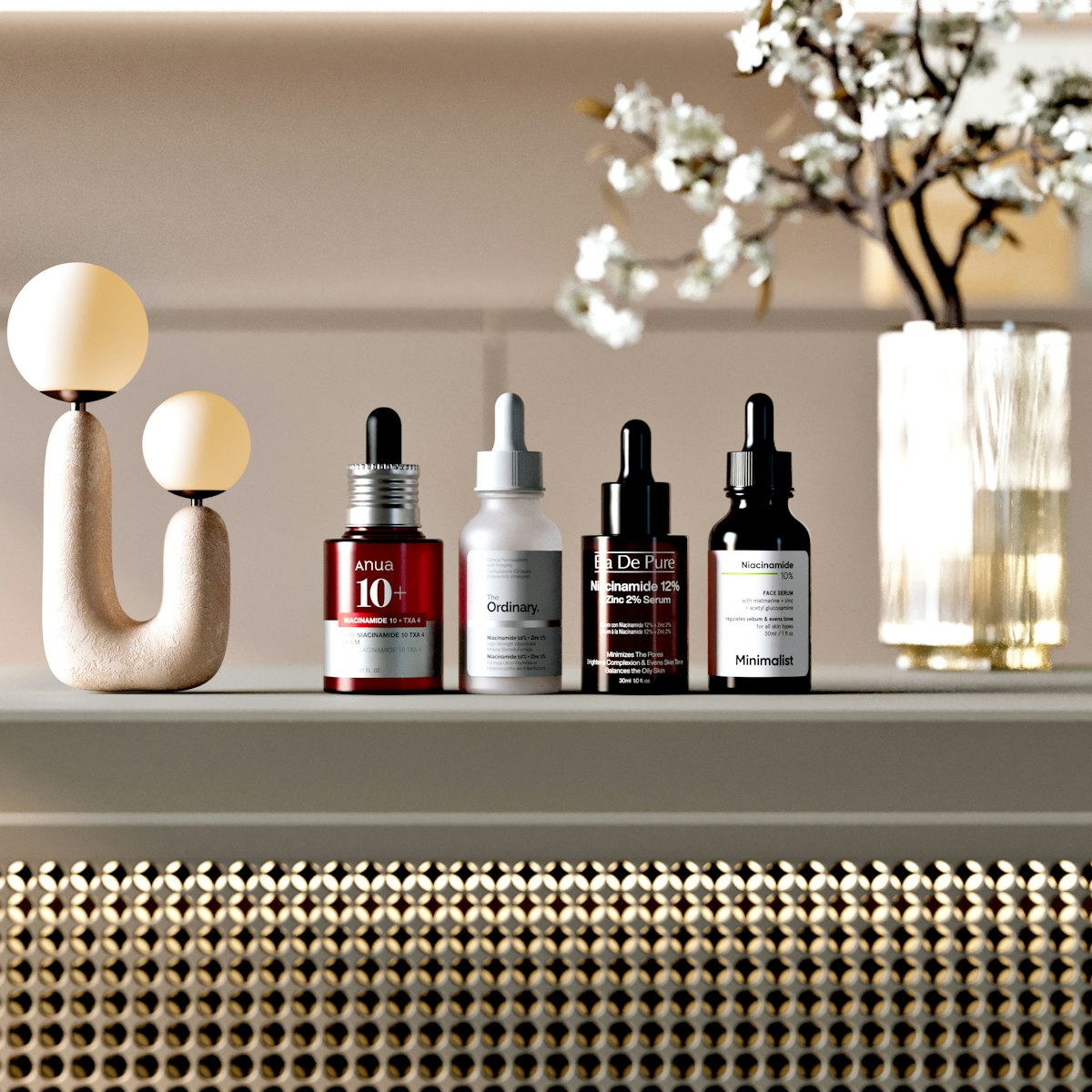
Niacinamide is the ingredient that wandered into every serum on the shelf. Scan any skincare aisle and you'll find it at 2%, 5%, 10%, even 20% — all promising the same things: calmer-looking skin, more even tone, smaller-looking pores, less midday shine. Which raises the obvious question nobody answers on the bottle: does the percentage actually matter, and if so, how much do you need?
Short answer: yes, but not the way the marketing implies. Niacinamide is one of the best-studied cosmetic ingredients we have, and most of its published research sits at surprisingly modest concentrations. Here's how the percentages stack up so you can stop paying for numbers you don't need.
The short version
For most people, niacinamide's sweet spot is 2–5%: that's where the published evidence for barrier support, hydration, and improved-looking tone lives, with minimal irritation. The famous 10% formulas are popular and generally well tolerated, but they aren't twice as effective — and they're the ones most likely to flush or sting sensitive skin. Three solid options across the range:
- The Ordinary Niacinamide 10% + Zinc 1%
- Naturium Niacinamide Face Serum 12% Plus Zinc 2%
- Good Molecules Niacinamide Serum
What to look for
Know what niacinamide actually does, because that tells you what a fair expectation looks like. It's a form of vitamin B3 that supports the skin barrier (it helps skin produce its own ceramides), improving hydration and tolerance over time. It's also used in formulas aimed at the appearance of uneven tone and dark spots, and it's a favorite for oily skin because skin tends to look less shiny with consistent use. What it won't do is resurface like an acid or work like a retinoid — it's a support player, and a very good one.
Now the percentages. Much of the classic research on niacinamide used 2% for barrier and hydration benefits and around 4–5% in studies looking at tone and the appearance of spots. Those are the ranges with data behind them. At 10% and above, you're beyond most of the published evidence — not necessarily harmful, but the return on each extra percent shrinks while the chance of flushing, warmth, and pilling under other products grows.
Read the whole formula, not just the headline number. A 5% niacinamide serum with panthenol, glycerin, and barrier lipids may do more for a reactive face than a bare 20% shot. Conversely, if a serum is built around niacinamide plus zinc PCA and little else, it's aimed squarely at oily, shine-prone skin — useful, but not a hydration product.
Niacinamide 10% + Zinc 1%
- 10% niacinamide with 1% zinc PCA
- Water-based serum aimed at shine and blemish-prone skin
- Vegan and fragrance-free
What we like
- The benchmark budget niacinamide serum
- Zinc pairing suits oily, congestion-prone complexions
Good to know
- Can pill under sunscreen or foundation for some users
- 10% flushes or stings a minority of sensitive users
Niacinamide Face Serum 12% Plus Zinc 2%
- 12% niacinamide with 2% zinc PCA
- More refined, less gummy texture than most rivals
- Fragrance-free and cruelty-free
What we like
- Layers more elegantly than the typical 10% serum
- Good pick if The Ordinary's texture bothered you
Good to know
- 12% is above the evidence-backed range — more isn't proven better
- Costs more than other drugstore niacinamide options
Niacinamide Serum
- 10% niacinamide in a lightweight water-based serum
- With betaine for a smoother feel
- Fragrance-free, budget-friendly
What we like
- Clean, minimal formula that layers well
- A gentle on-ramp to the 10% category
Good to know
- Still a high percentage for very sensitive skin
- Less widely stocked in physical stores
Choosing your percentage by skin type
Sensitive or rosacea-prone skin: start at 2–5%, ideally inside a moisturizer or a gentle serum with soothing ingredients. Introduce it once a day and watch for flushing — a brief warm feeling that fades is common at higher strengths, persistent redness is your signal to drop down.
Normal, combination, and tone-focused skin: 4–5% is the evidence-backed workhorse, and 10% is reasonable if your skin is unbothered by it. There's no prize for tolerating 10%, though — if a 5% formula gives you even-looking, comfortable skin, you've already won. Oily and blemish-prone skin: this is where the niacinamide-plus-zinc formulas earn their shelf space. Zinc PCA is included for its shine-managing reputation, and these serums layer well under gel moisturizers in the morning. Give them 6–8 weeks — the "pores look smaller" effect is really about less oil pooling and smoother texture, and it's gradual.
How to layer it without drama
Niacinamide is famously easy-going — it plays well with hyaluronic acid, ceramides, peptides, and most moisturizers, morning or night. Two practical notes. First, texture: several popular high-percentage formulas are slightly gummy and can pill under sunscreen or foundation.
Second, the vitamin C question. The old warning about never mixing niacinamide with vitamin C came from outdated formulations; modern serums are generally stable together. If a strong L-ascorbic acid serum plus a high-percentage niacinamide makes your skin flush, simply split them — vitamin C in the morning, niacinamide at night — and the problem usually disappears.
FAQ
Is 10% niacinamide better than 5%?
Not clearly. Most published research on niacinamide's barrier, hydration, and tone benefits used 2–5%. Higher percentages may suit very oily skin, but they also raise the chance of flushing and texture issues under other products, without proportional gains. Pick the lowest strength that gives you the result you want.
Why does niacinamide make my face flush and feel warm?
A temporary warm, flushed feeling is a known reaction, most common at 10% and above or when skin is already sensitized. It usually fades within 20–30 minutes. If it comes with itching, hives, or redness that lasts for hours, the formula isn't for you — drop to a lower percentage or stop.
Can I use niacinamide with retinol?
Yes — it's one of the classic pairings. Niacinamide's barrier support can actually make retinol easier to tolerate. Use them in the same evening routine (niacinamide serum before or after retinol, or in a moisturizer over it), or split them across morning and night if your skin prefers.
How long does niacinamide take to work?
Hydration and comfort can improve within a couple of weeks. More even-looking tone and less visible pores typically need 6–8 weeks of daily use. Like most skincare, judge it at two months — and judge the percentage by your skin's comfort, not by the number on the front of the bottle.
The niacinamide aisle is a good reminder that skincare labels reward reading past the headline. The right percentage is the one matched to your skin type and backed by actual research — usually a smaller number than the bottle wants you to be impressed by.