Best Cleansers for Sensitive Skin That Still Take Makeup Off
Sensitive skin shouldn't have to choose between leftover mascara and a stinging face. The two-step removal method that cleans thoroughly without scrubbing, plus three gentle cleansers that respect a reactive barrier.
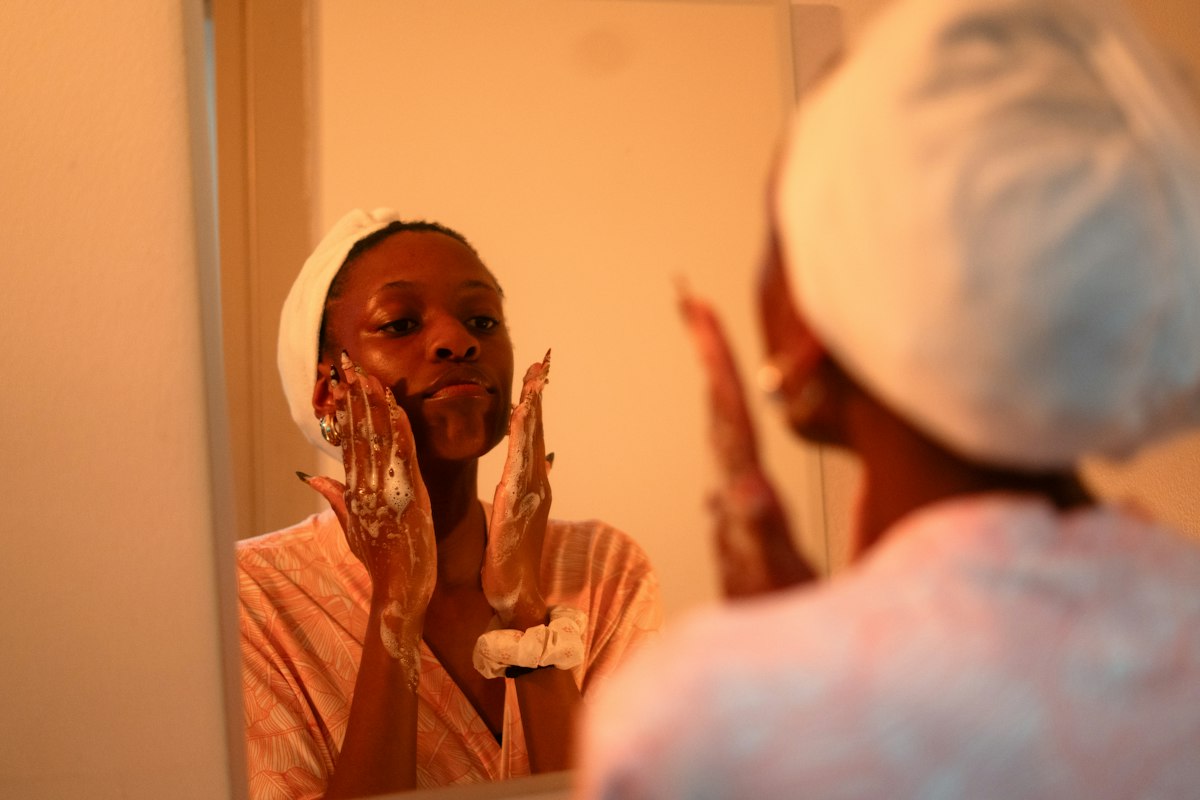
Here's the sensitive-skin cleansing dilemma: you get home wearing sunscreen and a full day of makeup, and you need it off. The strong cleanser in the shower will strip it in one pass — and leave your cheeks tight, warm, and faintly angry. The gentle cream cleanser feels like a hug but leaves a ghost of mascara and a filmy residue, so you wash twice more and end up irritated anyway.
Neither failure means your skin is impossible. It means the method matters as much as the product. Sensitive skin can absolutely get a full day off its face — it just needs the right cleanser format and a two-step approach on makeup days. Here's how to choose.
The short version
For sensitive skin, look for fragrance-free, low-foam or cream cleansers with gentle surfactants and a skin-friendly pH — and accept that on makeup days, a first pass with micellar water or a cleansing balm/oil, followed by your gentle cleanser, removes more with less scrubbing. Three cleansers that sensitive skin consistently gets along with:
- CeraVe Hydrating Facial Cleanser
- Vanicream Gentle Facial Cleanser
- La Roche-Posay Toleriane Hydrating Gentle Cleanser
What to look for
Surfactants do the cleaning, and their personality matters. Harsh, high-foam detergents (sodium lauryl sulfate is the classic example) are efficient and frequently too much for reactive skin. Modern gentle cleansers use milder surfactants — look for names like cocamidopropyl betaine, sodium cocoyl isethionate, or decyl glucoside — and they often foam less, which is a feature, not a flaw. Low foam does not mean low cleaning power.
Format guides the experience. Cream and lotion cleansers are the gentlest and best for dry, reactive skin. Gentle gel cleansers that produce a soft, low lather suit sensitive-but-oily or combination skin. Micellar waters are excellent as a first step or a morning cleanse, used on a cotton pad with zero rubbing pressure. Whatever the format, "fragrance-free" (which is stricter than "unscented") is the single most useful label claim for sensitive skin, and added extras like ceramides and glycerin help skin feel comfortable rather than squeaky.
Hydrating Facial Cleanser
- Non-foaming cream with ceramides and hyaluronic acid
- Fragrance-free, developed for normal to dry sensitive skin
- Removes light makeup and daily SPF
What we like
- Skin feels calm and normal afterwards, never squeaky
- Huge bottle sizes make it economical
Good to know
- Struggles with heavy or waterproof makeup on its own
- Some oily users find the finish too filmy
Gentle Facial Cleanser
- Mild surfactants with a soft, low lather
- Free of fragrance, dyes, soap and common irritants
- Slightly more cleansing power than a pure cream cleanser
What we like
- The default recommendation for reactive skin that still wants a 'wash' feel
- Handles daily sunscreen better than most cream cleansers
Good to know
- Can feel a touch drying on very dry skin in winter
- Heavy makeup still needs a first step before it
Toleriane Hydrating Gentle Cleanser
- Cream-gel with niacinamide and ceramide-3
- With La Roche-Posay thermal spring water
- Fragrance-free and soap-free
What we like
- Comfortable, milky cleanse that suits dry, reactive skin
- A little goes a long way
Good to know
- Costs more per ounce than the other two picks
- Not the strongest choice for very oily skin
The makeup-removal method that saves sensitive skin
Step one removes the day; step two cleans the skin. On makeup or heavy sunscreen days, start with micellar water on a soaked pad — press it to closed eyes for ten seconds to dissolve mascara rather than scrubbing. Alternatively, massage a cleansing balm or oil onto dry skin for a full minute; emulsified with a little water, it lifts foundation and water-resistant SPF more completely than any single water-based wash.
Step two is your gentle cleanser, 60 seconds, lukewarm water — never hot, which is a common and underestimated trigger for flushing. Use fingertips only. Washcloths, cleansing brushes, and scrubby pads have no place in a sensitive routine; friction is an ingredient too, and your skin is already telling you it dislikes it.
Pat dry with a clean towel, and get moisturizer on within a couple of minutes while skin is slightly damp. That small habit — cleansing gently and moisturizing promptly — does more for reactive skin over a winter than any single product swap.
Morning cleansing, and other sensitive-skin FAQs in practice
Many sensitive-skinned people do better skipping a full morning cleanse: a lukewarm water rinse, or micellar water if you wake up oily, is often enough. Your skin produced no makeup overnight, and every wash is a small withdrawal from the barrier bank. If your face feels tight by 10 a.m. despite a gentle evening routine, the morning wash is the first thing to cut. Patch-test new cleansers like you would a serum — a few uses along the jawline before committing your whole face. And note your personal triggers: for many reactive people it's fragrance, essential oils, or menthol. A cleanser is on your skin for a minute, not all day, so it tolerates slightly more than a leave-on product — but "rinse-off" is not a free pass when skin is already inflamed.
FAQ
Is double cleansing necessary for sensitive skin?
Not as a religion — but as a technique on makeup and water-resistant sunscreen days, yes, it genuinely helps sensitive skin. A gentle first step dissolves makeup so the second cleanse can be brief and soft instead of long and scrubby. On no-makeup days, a single gentle cleanse is completely sufficient.
Why does my skin burn when I wash it, even with water?
When the barrier is compromised, even water and mild products can sting because irritants reach nerve endings more easily. That's a barrier problem, not a cleanser problem — simplify your whole routine for a couple of weeks (gentle cleanser, plain moisturizer, sunscreen), keep water lukewarm, and see a dermatologist if burning persists or you have visible rash or scaling.
Are cream cleansers enough to remove sunscreen?
For a single light layer of sunscreen on a no-makeup day, a thorough 60-second cleanse with a cream or hydrating cleanser is usually fine. Water-resistant SPF and layered makeup are the cases where a first step (micellar water or a cleansing oil/balm) makes a real difference.
Should sensitive skin avoid foaming cleansers entirely?
Not entirely — the foam itself isn't the enemy; the harsh surfactants in old-fashioned high-foam formulas are. Modern gentle gel cleansers foam mildly using softer detergents and are fine for many sensitive faces, especially oily ones. Judge by how your skin feels afterward: calm and comfortable is the target, tight and squeaky is the red flag.
Sensitive skin doesn't need a weaker routine — it needs a smarter one. Take the day off in two gentle steps instead of one aggressive one, keep the water lukewarm and your hands soft, and your cleanser stops being the most stressful part of the evening.