Best Shampoos for Curly Hair That Define Without Drying
Curls that frizz by noon usually start with the wrong wash. Three sulfate-free shampoos matched to your density — plus how often to wash and when to clarify.
You know the moment. You step out of the shower, your curls look incredible — defined, bouncy, glossy — and by the time they're fully dry, half of them have puffed into a halo of frizz while the other half went flat. Somewhere between the towel and the front door, your wash day betrayed you.
Most of the time, the problem isn't your styling. It's your shampoo. A cleanser that's too harsh strips the natural oils curls desperately need (curly hair is drier by design — sebum travels slowly down a spiral), while one that's too rich leaves fine curls limp and coated. Getting the wash right makes everything after it easier.
The short version
If your curls come out of the shower dry, tangled, or already frizzy, your shampoo is the first thing to change. Look for sulfate-free cleansing, real moisturizing ingredients, and a formula matched to your curl density — then start with one of these three:
- SheaMoisture Manuka Honey & Mafura Oil Intensive Hydration Shampoo — the deep-drink option for dry, thirsty curls
- Not Your Mother's Curl Talk Shampoo — a balanced everyday wash for most curl types
- Carol's Daughter Wash Day Delight Water-to-Foam Shampoo — a gentle, lightweight cleanse for fine or easily weighed-down hair
What to look for
Sulfates aren't evil, but daily sulfates are a lot. Traditional cleansing sulfates (like sodium lauryl sulfate) remove buildup effectively, but on curly hair they often remove too much — squeaky-clean curls are usually just dehydrated curls. Most curl routines do best with sulfate-free cleansers for regular washes, reserving a proper clarifying shampoo for occasional buildup removal.
Read the first five ingredients. Water aside, you want to see humectants and emollients early in the list: glycerin, aloe, honey, shea butter, coconut or mafura oil. If a shampoo markets a hero ingredient but it sits below the fragrance, there's barely any in the bottle.
Match richness to your hair, not your hopes. Thick, coarse, high-porosity curls drink up creamy formulas. Fine, low-density, or low-porosity hair gets weighed down by the same products and does better with lighter, water-based cleansers. Protein is the other dial: hair that feels mushy and stretchy when wet usually needs protein (look for keratin, rice or silk protein); hair that's stiff and straw-like needs less of it, more moisture.
Manuka Honey & Mafura Oil Intensive Hydration Shampoo
- Sulfate-free cleansing with manuka honey and mafura oil
- Formulated for dry, brittle hair and tight curl patterns
- Baobab and fig extracts for softness and shine
What we like
- Deeply moisturizing without a separate pre-poo for many users
- Leaves curls soft rather than squeaky or stripped
Good to know
- Too rich for fine or low-density curls
- Creamy formula may need a clarifying wash in rotation to prevent buildup
Curl Talk Shampoo
- Sulfate- and silicone-free formula with a rice curl complex
- Avocado oil and keratin amino components for strength and definition
- Designed to cleanse without stripping curl moisture
What we like
- Balanced clean that works across a wide range of curl types
- Widely available at drugstores and easy to pair with the Curl Talk conditioner
Good to know
- May not be moisturizing enough alone for very dry, coarse hair
- Frequent users of heavy stylers may still need an occasional clarifier
Wash Day Delight Water-to-Foam Shampoo
- Micellar water-to-foam format with aloe
- Sulfate-free, lightweight cleansing that rinses clean
- Micellar technology lifts dirt and oil without heavy residue
What we like
- Cleanses thoroughly while staying feather-light
- Good option for low-porosity hair that resists creamy products
Good to know
- Less conditioning than cream-based curl shampoos
- Foam format means you may use more product per wash on very thick hair
How to wash curls so shampoo can actually work
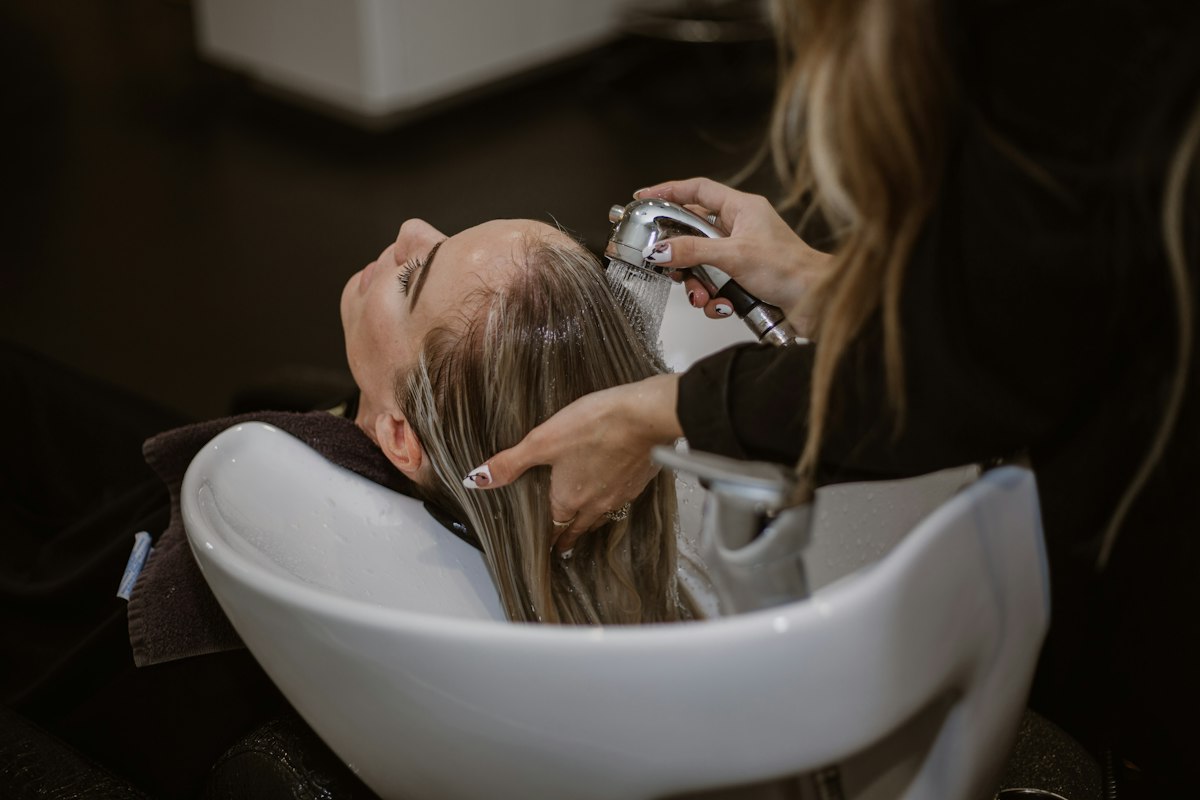
Technique matters as much as the bottle. Start by fully saturating your hair — curls should be dripping, not damp — because water itself does a surprising amount of the detangling and dirt-loosening work. Apply shampoo to your scalp only, massaging with fingertips (never nails) for a full 60 seconds. The suds running down the lengths as you rinse are enough to cleanse them; scrubbing the ends directly is how you manufacture tangles and frizz.
On days your hair feels product-heavy, double-cleanse: a quick first wash to lift buildup, a second to actually clean. Rinse with lukewarm water, then condition generously and detangle only while conditioner is in — dry detangling is a breakage machine for curls.
Mistakes that undo a good shampoo
The first is washing too often. Most curly hair thrives on washing every three to seven days; daily washing usually means daily fighting dryness. If your scalp gets oily fast, the answer is usually a better scalp massage and a proper rinse, not more frequent shampooing.
The second is skipping the reset. Even the gentlest routine accumulates stylers, minerals from hard water, and pollution. A clarifying wash every few weeks — or whenever your curls suddenly stop responding to products that used to work — clears the slate so your moisturizing shampoo can do its job again.
FAQ
How often should I wash curly hair?
Most people with curly hair do best washing every three to seven days, depending on scalp oiliness, workouts, and how much product they use. If your scalp itches or flakes before your hair looks dirty, wash more often and focus the cleansing on the scalp rather than the lengths.
Is sulfate-free shampoo always better for curls?
For regular washing, usually yes — sulfate-free formulas cleanse without stripping the oils curls struggle to replace. But sulfate-free doesn't mean buildup-proof. An occasional clarifying shampoo (which may contain sulfates) is still a smart part of a curly routine.
Why do my curls look great wet but frizzy when dry?
That gap usually means your hair is losing moisture as it dries. A more moisturizing shampoo helps, but so do the steps after it: condition thoroughly, apply styling products to soaking-wet hair, and avoid touching your curls while they dry.
Can one shampoo work for all curl types?
Not perfectly. Wavy, fine hair and thick, coily hair have opposite problems — one needs lift and lightness, the other needs weight and richness. The picks above are grouped by exactly that logic, so choose based on your hair's density and dryness, not just your curl pattern.
If you take one thing from this guide, let it be this: wash day is the foundation, not a chore to rush through. Pick a shampoo that respects your curl pattern's moisture balance, give your scalp the full minute it deserves, and the styling you already own will suddenly start working the way the bottle promised.