Cream Blush for Beginners: Where to Put It and How Much Is Too Much
Cream blush is the easiest way to look healthy and the easiest way to look sunburned. This beginner's guide covers placement by face shape, the one-third rule for how much to use, and how to rescue an over-application.
Every beginner has a blush story. Mine involves a school photo where I look like I've been slapped by two very symmetrical hands. Maybe yours is the wedding-guest portrait where your blush sits in two stripes, visible from space. Cream blush is having a huge moment — and it's also the product most likely to humble a beginner in public.
Here's the reassuring truth: cream blush is actually the most forgiving blush format once you understand two things — placement follows your face shape, and the amount you need is about a third of what you think.
The short version
Cream blush melts into skin and foundation in a way powder can't, giving that lit-from-within flush that reads as health rather than makeup. Start with a pea-sized amount total — for both cheeks — tap it onto the apples or slightly above, blend the edges upward, and always check in natural light before adding more. These beginner-friendly formulas make learning easy:
- Rare Beauty Soft Pinch Liquid Blush
- e.l.f. Putty Blush
- Maybelline Cheek Heat Gel-Cream Blush
What to look for
Pigment level is the beginner's first decision. Some liquid blushes are famous for extreme pigment — one dot covers both cheeks — which is wonderful value but unforgiving while you're learning. A sheerer, buildable formula (often gel-cream or putty textures) lets you layer up in small steps instead of starting with too much and buffing it away.
Format matters for control. Putty and pot blushes apply beautifully with fingertips and are easy to sheer out. Tubes with doe-foot wands demand a lighter touch. Sticks are convenient and precise for drawing a short line to blend out. If you're nervous, fingers plus a putty or stick format is the gentlest learning curve.
Shade-wise, choose something close to the color your cheeks turn after a brisk walk or a good laugh — usually a muted rose, peach, or berry depending on your depth and undertone. Very bright or very shimmery shades amplify placement mistakes; save them for when your technique is automatic.
Soft Pinch Liquid Blush
- Liquid formula with intense pigment payoff
- Doe-foot applicator; one dot per cheek is the brand's guidance
- Wide shade range across soft pinks, berries and corals
What we like
- A single bottle lasts an exceptionally long time
- Blends out to a natural, skin-like flush
Good to know
- Extremely pigmented — beginners must use less than one dot
- Dries down quickly, so blend immediately
Putty Blush
- Putty-to-cream texture that applies with fingertips
- Infused with argan oil and vitamin E per the brand
- Buildable, semi-matte finish
What we like
- Sheer enough to layer slowly without mistakes
- Hard to over-apply — ideal learning format
Good to know
- Pots require fingers or a brush (less travel-friendly)
- Sheerer shades may need two layers on deeper skin
Cheek Heat Gel-Cream Blush
- Gel-cream formula in a squeeze tube
- Water-infused, sheer tint designed to look like a natural flush
- Applies with fingertips, no tools needed
What we like
- Nearly impossible to overdo
- Feels weightless and never cakey on skin
Good to know
- Sheer tint disappears faster than stronger formulas
- Small tube, and shades lean bright
Placement: where cream blush actually goes
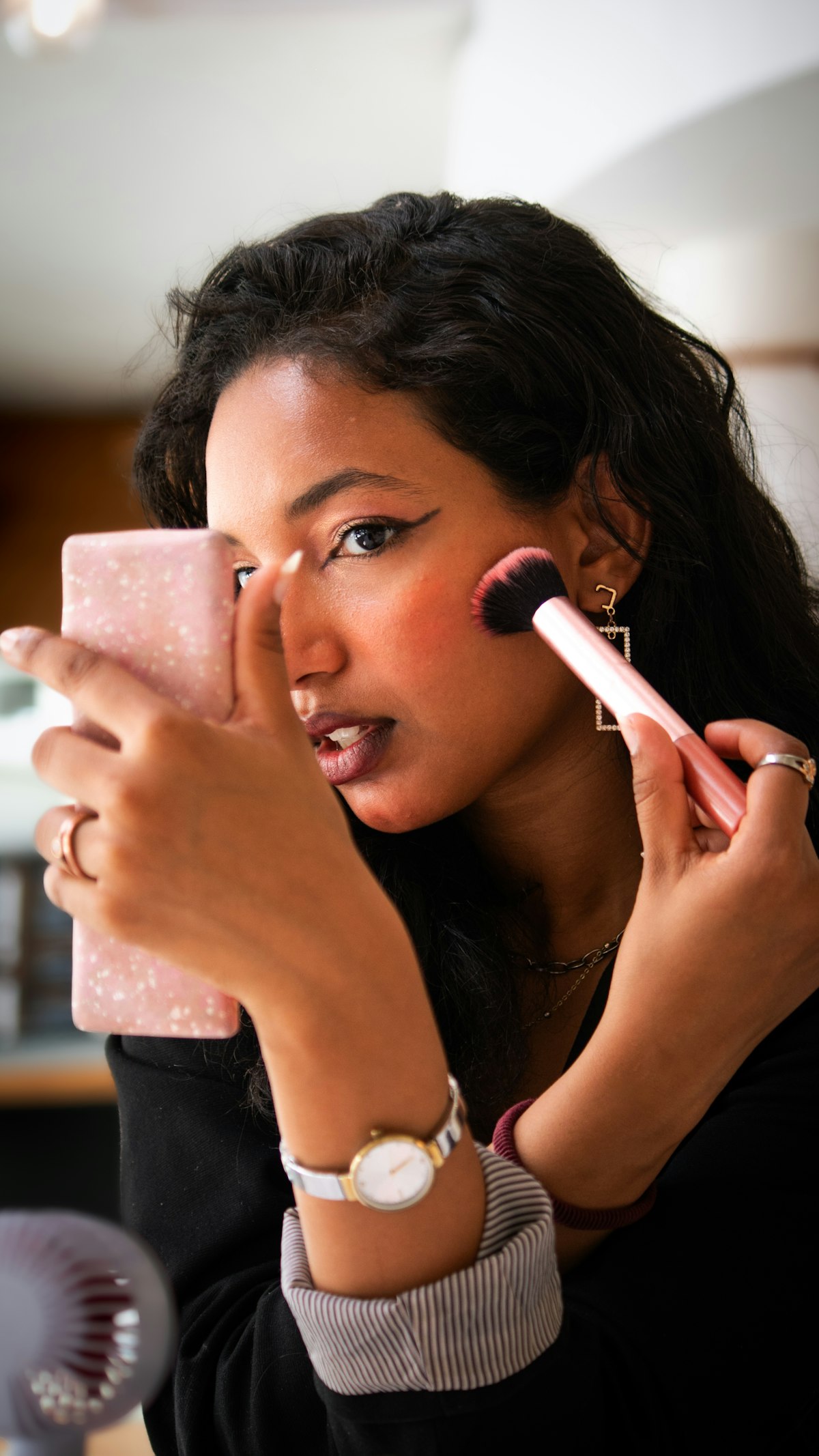
Find the apples of your cheeks by smiling, then relax your face — blush should be applied to the relaxed face, not the smile, because smiling lifts the cheek and the color drops when you stop. Place the product on or slightly above the apples, then blend up and out toward the temples. Blending upward creates a lifted effect; blending down or placing color too low drags the face visually downward.
Keep blush inside an invisible boundary: no lower than the bottom of your nose, no closer to the nose than two fingers' width. If you wear glasses, check placement with your frames on — frames change where the eye reads "cheek." And apply blush after foundation but before powder; a light dusting of powder over the top subtly mutes intensity if you overshot.
One more rule that saves beginners constantly: do both cheeks in stages. One small dot per cheek, blend, assess, repeat. Working one cheek to perfection and then trying to match it invites the second-cheek spiral.
How much is too much (and how to rescue it)
Too much is when you can see the shape of the application — a circle, a stripe, a patch with a visible edge. Blush should look like color rising through the skin, not sitting on it. Indoors it should read as "healthy"; if it reads as "makeup" from arm's length, soften the edges.
Rescue moves, in order: first, blend the edges with a clean damp sponge — this alone fixes most over-application. Second, pat a thin layer of your foundation (whatever's left on your sponge) over the blush to mute it without removing it. Third, a light veil of translucent powder tones down intensity and adds softness. What never works is adding more blush to "even it out" — that way lies the school photo.
FAQ
Should beginners choose cream or powder blush?
Cream, especially on dry or mature skin — it melts in and is easier to rescue when you overdo it. Powder is a bit easier to control on very oily skin, where cream can slide by afternoon.
Where do I put blush if I have a round face?
Slightly higher and further back than instinct suggests: start at the top of the apple and sweep toward the ear, keeping color off the front-center of the cheek. This creates angles instead of roundness.
Can I apply cream blush over powder?
It's the riskiest order — cream over powder can turn patchy and lift what's underneath. The reliable sequence is liquid/cream products first, powder last. If your base is already powdered, press the blush on with a sponge using almost no pressure.
Cream blush or liquid blush — which is easier?
True creams and putties are easier: they move slowly, so you have time to blend. Liquids are more pigmented and set faster, rewarding experienced hands. Learn on cream, graduate to liquid if you want stronger color payoff.
Cream blush rewards a light hand and punishes nothing else. Learn your placement with a forgiving formula, build in tiny layers, and the "healthy, not made-up" flush that everyone chases becomes a thirty-second habit instead of a morning gamble.